New Zealand, Part III – Seahawk’s Splash in Orams Shipyard

New Zealand, Part III – Seahawk’s Splash in Orams Shipyard

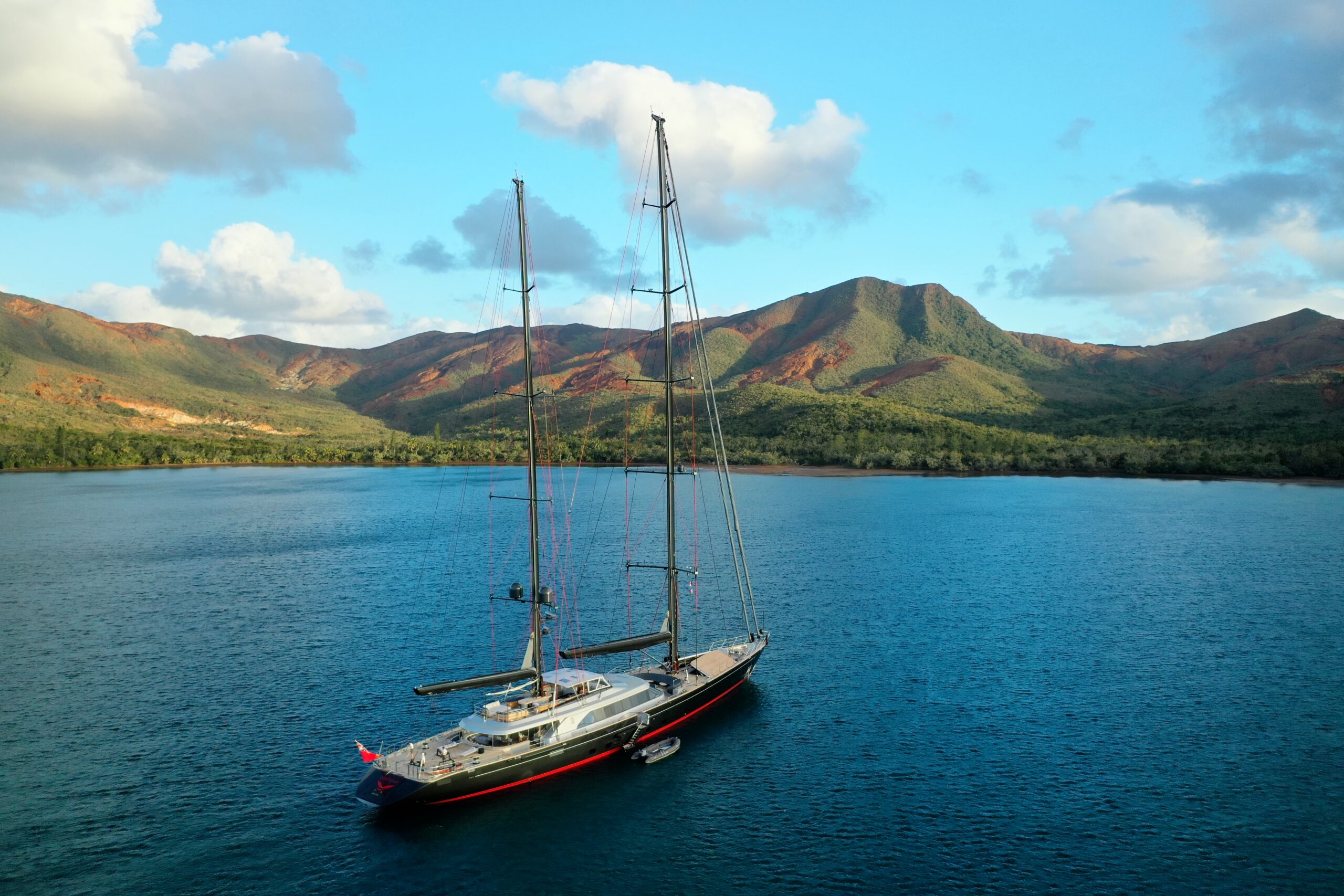
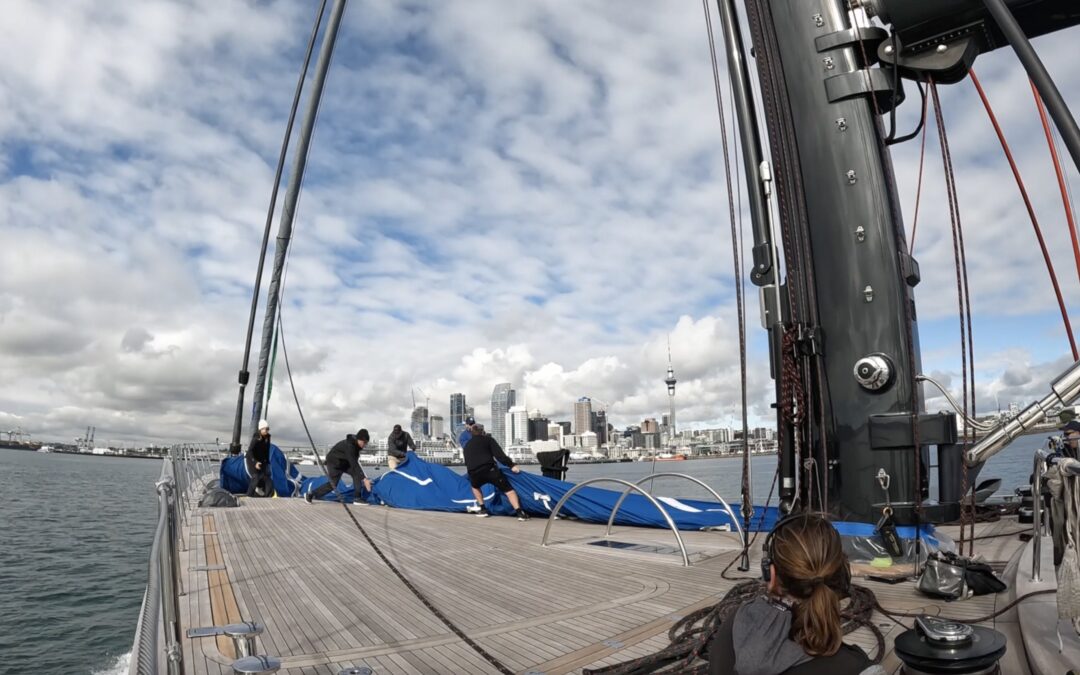
After 11 months in Auckland, Seahawk has finally returned to the water and is on her way to New Caledonia, where she will cruise for the next two months. How lovely it is to finally see those sails up and feel the breeze as we cut through the water’s surface in the Pacific Ocean.

For a good few months of the refit in Orams shipyard, we were in the thick of finding new issues we didn’t plan for. These eventualities often mark a depressing period in any refit for the captain, crew and owners, as the continual stream of obstructive discoveries impacts the workload, cost, and duration of the project. However, we pushed through and found light at the end of the tunnel.

The major tasks were progressing, as the welding to the hull and stern tubes came to an end. Significant progress was being made elsewhere, with the rig components returning from service, and the masts completing the painting process.

On completion of the hull welding, the main hull and superstructure painting could continue, with the make-or-break paint shots on the hull; a huge area to paint, and it required to be as perfect as possible to avoid further delays to our schedule. I’m pleased to say that the Orams paint team achieved this, despite the winter weather in Auckland, resulting in a big sigh of relief from all concerned.

Completing this activity was key to the project flow, as we could start to accelerate toward the major milestones of removing the tent and re-assembling the boat. It IS amazing how quickly things do come together when all the pieces are ready to go. The masts were moved for ‘dressing’ (refitting the rig components), the tent cover came off, and 4 ‘crane days’ resulted in the majority of deck furniture and large fittings being re-attached. 

Electrical power was also returned to the boat following the interruption necessitated by the welding work. This was a nerve-racking moment as many will know; re-energising systems after a long shutdown period, especially when so many electronic and computer-based systems are involved, can be highly problematic. We had an added complication, as so much wiring had been disconnected, and many 3-phase motors were removed and re-installed without being able to properly test. So there was a huge scope for issues here.

We got relatively lucky and only had a few issues that were solved with some remote support and the replacement of several system batteries through the boat, but no real show-stoppers. Phew! When we saw green lights on the sail system control PLC, I can assure some of us started to sleep a lot better.

This period is a manic and stressful effort for all concerned, with contractors all trying to squeeze into the same working spaces, crew scurrying around putting things together, and trying to remember where some parts are (it’s common to lose some bits and end up scratching your heads looking for them). Dave White and his rigging team were on a tight schedule too, as they had 2 and a half weeks to rebuild both masts, plus re-attaching all the antennas in readiness for the re-stepping date; a date fixed due to the availability of the crane and associated infrastructure needed. The interior crew gets to see the magnitude of the clean-up task too as protective coverings are removed. While these do prevent a lot of significant damage, there are always areas that need attention and need scheduling around the high activity going on.

However, with all the above taken into account, 3 weeks after completion of the final paint shot, Seahawk was ready to be picked up and put back in the water, and the masts were ready to go back in.

Following those crazy weeks, we finally reached the magic launch day. The original plan had us putting Seahawk back in the water on Monday, June 26th, but the weather was looking like it would have other ideas. With the necessity of a calm day for stepping the rigs immediately following launch, the yard made the call to bring things forward a day; Sunday 25th became D Day, and we were ready!

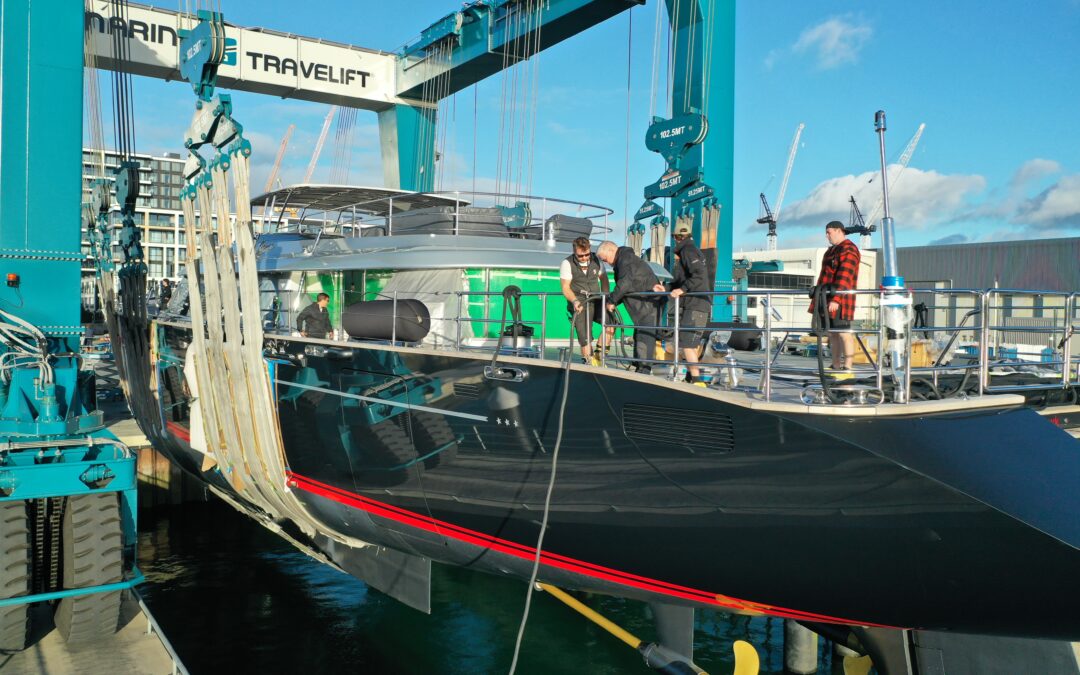
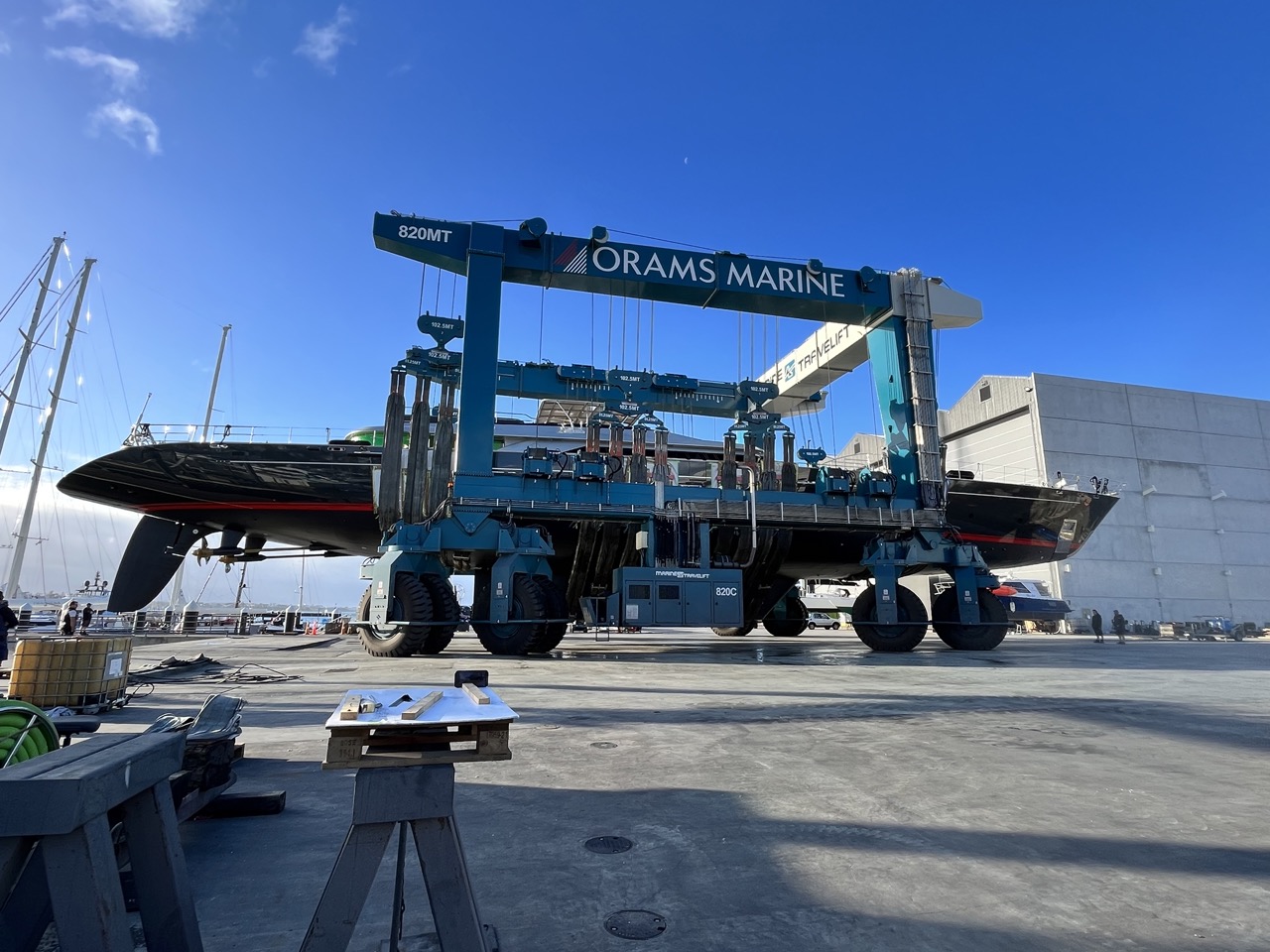
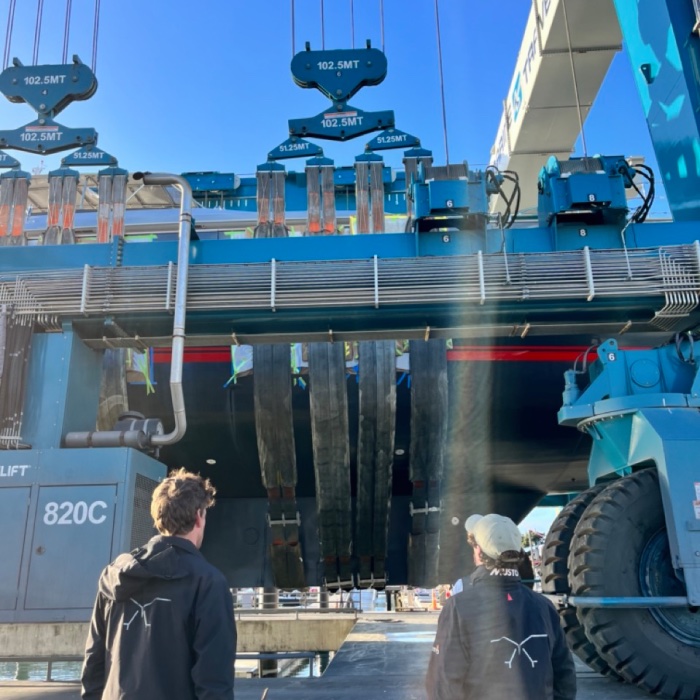
While lifting a 60m sailing yacht is never a trivial task, lifting one with a brand new paint job requires extra care. The launch becomes more time-consuming than the haul out, owing to the protection needed to prevent damage to the still-curing paint surfaces. The weather gods smiled at us and gave us a dry day ( a rarity in Auckland, regardless of the season). Foam pads and brown paper were applied to the hull in the way of the lifting strops and the machine driven around the boat. Sunday catering consisted of a wonderful fry-up brunch. 

At around 14:00, everything was ready and the satisfying moment of knocking out the wooden blocks under the boat could begin. Then it’s time to stand back and watch as the Travelift carries out its manoeuvre to bring the boat over the launch pit. Then it’s the engineers, mechanics and plumbers’ big moment as the boat is lowered in to test the new valves and seals for the first time. Fortunately, aside from one reasonably sizeable leak on testing the fire main (due to a removed pipe section, unbeknown to those on board prior), the boat was watertight and the launch was considered a success (and one day ahead of schedule!)

If you’d like to know more, watch the video below, made by videographer Righardt Van Hyussten on Seahawk’s splash day.

written by Rotational Captain Steve

Galapagos – A Science Trip to Darwin and Wolf

Galapagos – A Science Trip to Darwin and Wolf

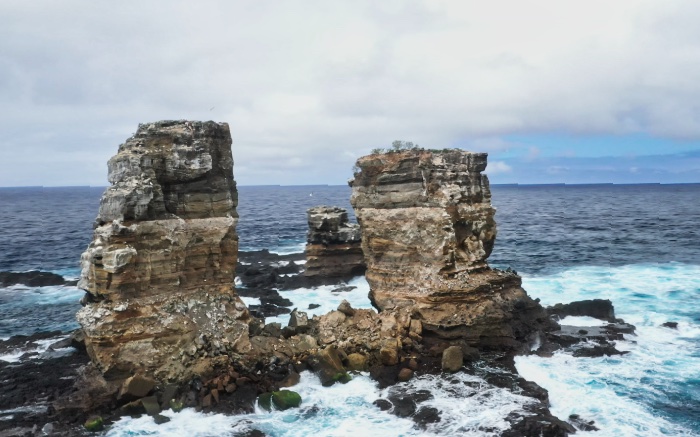
Seahawk arrived to Darwin in July 2021, the northernmost island in the Galapagos archipelago, after previously cruising the southern parts of the province and formally launching YachtAid Global’s Swimming and Sailing program in San Cristobal.

Much excitement could be felt on the boat as the inaugural science mission was about to begin. In a joint effort led by YachtAid Global, Seahawk became an active participant in Operation Swimway; a project dedicated to lending support to science and marine conservation NGOs conducting state-of-the-art research around the world.

Operation Swimway’s focus is to determine patterns of migratory animals, such as sharks, mantas, and turtles. Understanding the movements of these animals and the corridors they use to feed and breed is key for protecting all marine life, especially so for sharks who have to take increasingly dangerous journeys due to unsustainable fishing practices and other hazards including water pollution. High on the list of Operation Swimway’s priorities is to precisely define endangered species migratory patterns. The data collected and analyzed is then used to help define candidate Marine Protected Areas (MPAs) with the goal of seeking and obtaining approval from the responsible governing agencies.

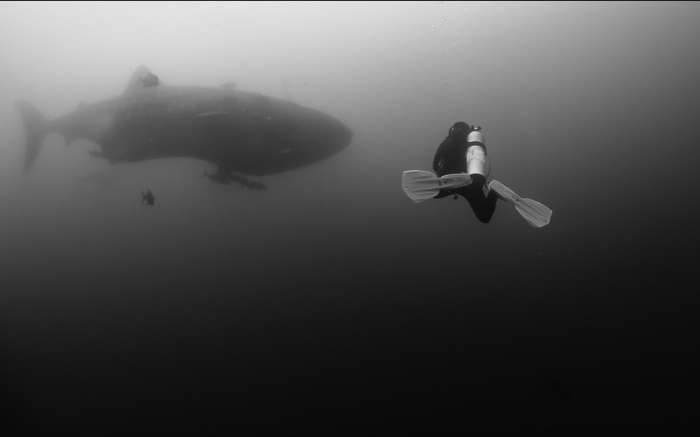
While visiting Darwin, Seahawk was joined by scientists from the conservation group Migramar, a well-known organization that operates in the Eastern Pacific Ocean dedicated to studying the movement of threatened marine species. Dr. Alex Hearn led the effort on this expedition, which focused on studying whale sharks, known to visit Darwin Island during the July, August, and September timeframe. Adult female whale sharks congregate annually in the Galapagos, a phenomenon that is one of the subjects of Migramar’s research. Most of the females are pregnant when visiting the islands, suggesting the archipelago could serve as a nursery for these sharks. The mission’s objective was to attach GPS tags to individual whale sharks in order to provide tracking data based on a representative sample for determining the overall nature of species’ movements. Very little is known about where the whale sharks go, their pupping grounds, or their feeding habits.

During our cruising of Darwin and Wolf, we were lucky to have several encounters with some of the whale sharks. As stewardess Thea remembers:make

“It was a crazy experience. I suddenly saw this 12-meter fish swimming very fast past us. You could feel the water moving around you as she swam past. The scientists tried to tag her, but failed to do so as she was at full speed. The sighting lasted a few seconds, but it was incredible.”

Some of the attempts at tagging these sharks were successful, but the process is far from perfect. The sheer size, speed, and strength of whale sharks make the attachment of transmitters very challenging.

But not all was focused on GPS tracking. Dr. Diana Alexandra Pazmiño Jaramillo was part of the science team leading Operation Swimway. Her work at the Galapagos Science Center focuses on a more evolutionary approach; research designed to trace the migration patterns of various shark genotypes by using genomics, a special kind of DNA fingerprinting used to identify individual species without actually tagging them. Dr. Diana Alexandra’s work involves analyzing the secretions and tissues of the animals at a molecular level, which is crucial to revealing their behavior and patterns of movement. 

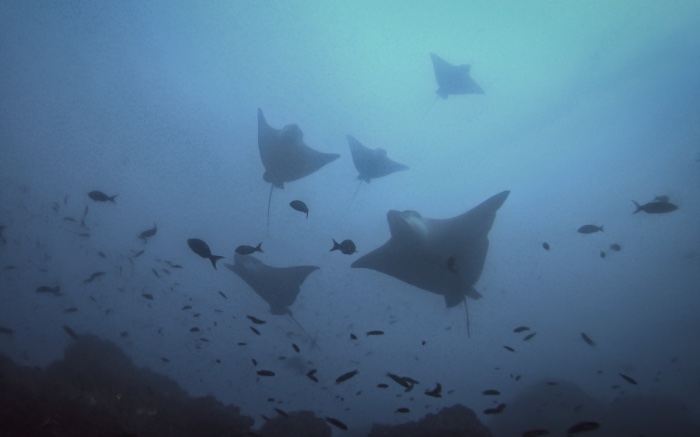
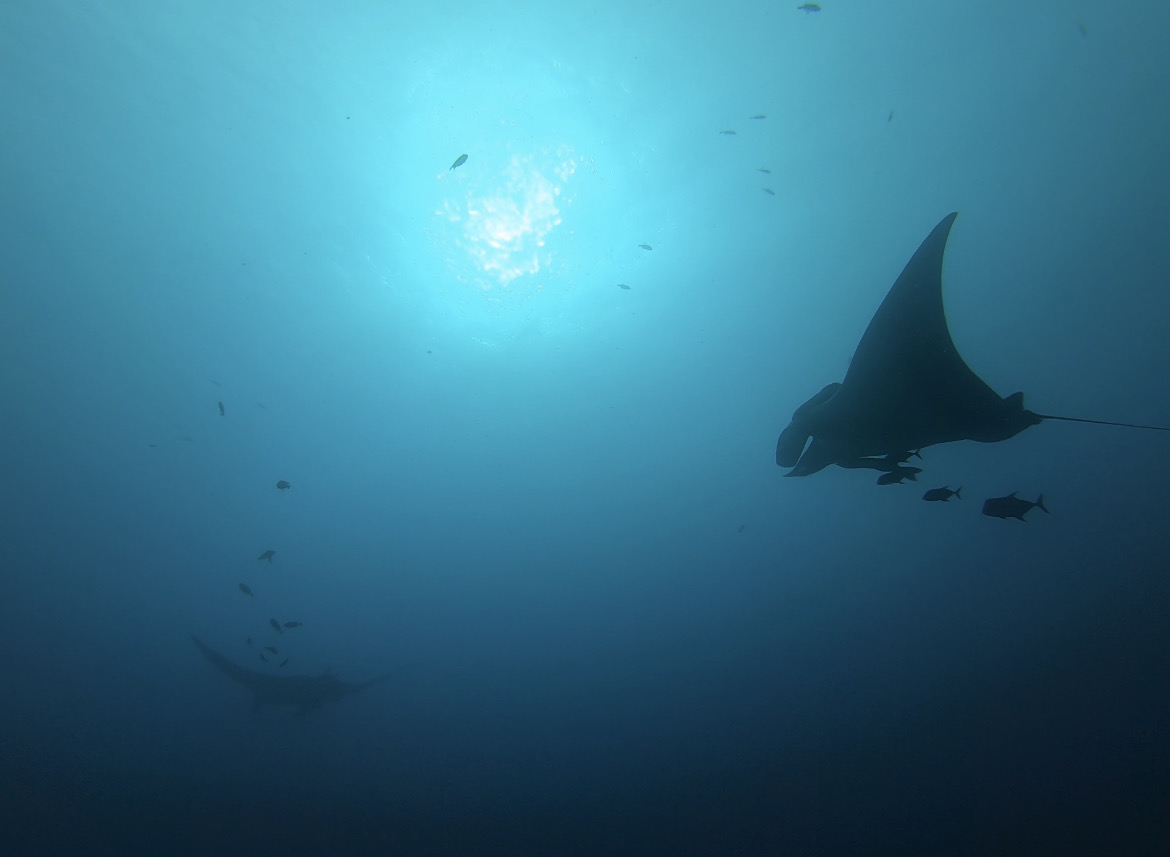
Miguel Herrero, Marine Biologist and Project director at Mantas Ecuador, was also on board Seahawk. His research revolves around developing an understanding of both the reproductive processes and migration patterns of giant manta rays. But Miguel is also interested in the role of cleaning stations and the special fishes that symbiotically bond to keep the rays healthy and free of parasites. Like many symbiotic relationships in the ocean, there is much specialization. In the case of the giant mantas, there are only a few specific types of cleaning fish suitable for servicing this shark family species. 

During our days at Darwin and Wolf, owners, guests, and crew were fortunate to experience the outstanding marine life that the famous Galapagos islands hold, while also witnessing how research on marine animals is conducted by professional scientists; an inspiring and educational experience.

However, not all was fieldwork. The Seahawk team also attended presentations held by the Migramar scientists, in which they discussed the experimental design needed to further improve the understanding of the mechanisms in play. Much was about how to better track the animals, sharks and mantas, but also important to the cause was developing a comprehensive understanding of the ecosystem; the Galapagos islands in particular are complicated because of the byzantine matrix of converging currents, some very warm, some very cold. It is acknowledged that a more holistic approach to science is likely the right answer in order to secure the outcome desired.

Prototypically, developing MPAs in isolation will not solve the problem unless other environmental hazards are addressed. Migramar and other similar NGOs realize the problem is multifaceted and are working to establish more comprehensive understandings and solutions. As for the Seahawk team, the boat is exceedingly proud to have played a small role in this most important effort.

If you’d like to know more, you can watch the video below. It includes interviews with the Migramar team on board, as well as footage of our days cruising the islands. Not to be missed!

Seahawk on Robb Report magazine

Seahawk on Robb Report magazine

Luxury lifestyle magazine “Robb Report” recently published an article on Seahawk and other super yachts that are using their resources to aid scientists in conservation research.

 The article goes through Seahawk’s past projects on board, from supporting research in French Polynesia to the first projects carried out in Galapagos. It also includes some insight from rotational captain Stephen Edwards.

 you can read the article here.

Seahawk has been in the shipyard in New Zealand since September 2022. As the day to get back to sea approaches, we look forward to getting back to traveling and continuing to support important science research across the Pacific.


Seahawk wins 2023 YCM Explorer Award

Seahawk wins 2023 YCM Explorer Award

Last month, S/Y Seahawk received the 2023 YCM Explorer Awards by La Belle Class Superyachts for Adventure and Environmental Ethics. These awards recognize Superyacht owners with a commitment to marine conservation and sustainability, shown in areas such as innovative technology on board or philanthropic programs.

The awards are given by a jury of experts in the areas of Technology & Innovation, Mediation & Science, Adventure & Environmental Ethics

Rotational Chief Stewardess Nicola Watton received the award on behalf of S/Y Seahawk’s owners and crew. The award was presented by Prince Albert II of Monaco at the Yacht Club de Monaco. 

S/Y Seahawk’s team is proud of the work done in the past three years, and looking forward to supporting new projects in the future, wherever in the world we are.

With this recognition, we hope to inspire other Superyacht owners to turn their adventures at sea into philanthropic programs that help local communities and support scientific research, key to protecting our marine environment.

From the Jury:

“S/Y Seahawk (60m) was presented as a yacht not built for science but with a strong desire to help science and the oceans. It has carried out numerous missions that have helped better understand migration patterns, fishing impact, etc. The yacht is also associated with projects such as the set-up of a sailing school in the Galapagos Islands with Yacht Aid Global, funding an instructor and converting a building for the school. It has also supplied educational materials to schools in the Tuamotus (French Polynesia) & Fiji archipelagos in 2022; all of which won it the award in the Adventure & Environmental Ethics.”

Explorer Awards
All images are courtesy of Yacht Club de Monaco | Mesi

You can read the full article about the Explorer awards here.

New Zealand, Part II – Orams Shipyard, Auckland

New Zealand, Part II – Orams Shipyard, Auckland

As the saying goes, despite “the best plan of mice and men”, yachts frequently have a tendency to unearth the unknown.

With Seahawk hauled out and safely choked on the hard, the next step was the disassembly of the boat for the painters, as well as the opening of sealed spaces and closed machinery for inspection by the ABS surveyor. 

The process of a refit is often a voyage of discovery, and it can generate a range of new issues previously hidden from view. While experience is valuable in pre-empting these additional tasks, there’s sometimes the risk of finding new surprises.

Seahawk followed this mantra and gave us a few curved balls. The most significant one was the need to replace both stern tubes of the boat. These are pipes that run between the aft wall of the engine room to the hull, with the propellor shaft spinning inside it. These tubes are constantly full of seawater, which is highly destructive. This area of the boat is prone to gradual corrosion failure. In Seahawk’s case, there had been a rapid corrosion process taking place since some stainless steel sleeves had been fitted into the tubes at some stage for an unknown reason.

This presented a major new project for the yard with several hurdles, starting with the acquisition of the specific grade of aluminium required, and its paper trail of material approval for ABS. As it turns out, 5083-grade aluminium in 300mm thickness is a rare beast. We scoured the world to find enough for the job. Eventually, a dealer in Holland had some that could be acceptable.

The other major hurdle to this job was accessing the area for work; the boat’s main electrical distribution panel is directly above the starboard side stern tube, meaning that the vessel would have to go dead ship for the duration of the work, and the hundreds of cables meticulously disconnected and then reconnected following the extensive welding work that would be required; this electrical job represented more labor time than the metalwork itself.

Unfortunately, a job like this comes with penalties beyond just the unexpected costs associated with the extra work; Carrying out welding work on the hull must be in accordance with fire safety requirements, and it’s, of course, messy. Performing paintwork on the boat requires the use of solvents that are explosive, as well as clean room conditions, creating a major conflict between these two tasks, making scheduling a real headache for the management team, and inevitably delaying the completion of the overall project.

The other ugly feature of working on boats, especially aluminium ones, is corrosion in general. Steel boats “rust”; composite boats get “osmosis”; and aluminium boats suffer electrolytic corrosion, which is caused when two different metals have a continuous current in between them, as they are in contact with an electrolyte substance. Aluminium vessels are often referred to as “Alker Selzer boats”, as they essentially ‘fizz’ like the pills do when in seawater.

When performing a re-paint, dealing with corroded areas is always an add-on to the project, as it’s simply not possible to gauge the amount of corrosion until the painters start digging into the job. Yacht paint is not just a thin coat of color over the surface; The full job requires special primers applied to the bare surface, followed by several layers of a fairing compound that are used to create a smooth shape before a final primer. In Seahawk’s case, there’s also a metallic paint finish; a base color coat followed by layers of clear coat. In the event of corrosion of the metal substrate, all these layers have to be rebuilt and perfectly blended with the existing sound materials. This is time-consuming and tends to be an expanding job. Seahawk’s paint is 9 years old and was hiding a lot of corrosion under some particularly thick areas of the fairing, adding a great deal of time to the overall paint project and expected completion date of the boat.

These major developments, along with other smaller but nonetheless significant discoveries, pushed the duration of our refit from an estimated 6-month project out to a solid 9 months.

At this stage, the vessel is a “War Zone”, a daunting sight with so much taking place simultaneously and so much “destruction” to access the projects themselves.

As of now, Seahawk is being taken care of in Orams Marine and will be back in the water in June 2023. An exciting itinerary follows as we will continue to explore the South Pacific.

The following video, made by Righardt (dive instructor & videographer on board), captures some of our day-to-day experience in the shipyard. Enjoy!